Brief
Build an arcade machine using an alternative controller or by hacking a standard controller. The game had to be as fun and original as possible and eventually break the codes of the classic video game.
My role
As the only designer with Arduino skills, I worked on:
- Designing and programming the game mechanics.
- Assembling the electronic components.
- Assembling them in the arcade.
Concept
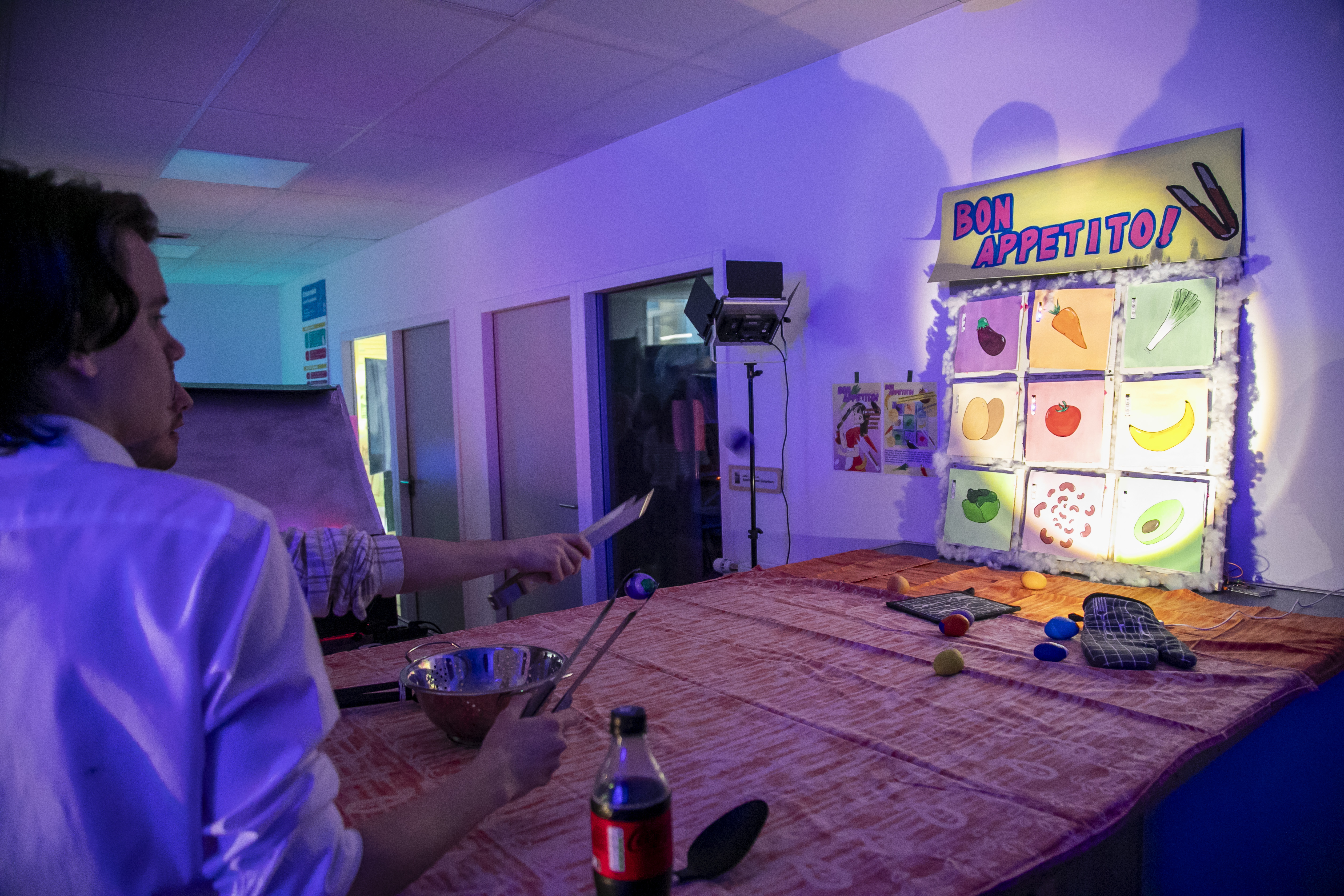
Bon Appetito! is 1v1 arcade game mixing a tic-tac-toe and a knock ‘em down. It is composed of layer of 3x3 pressure plates with 3 LEDs each. Two players battle each other by using kitchen utensils as alternative controller and throwing vegetables onto the board.
Each player is equipped with kitchen utensils such as a clamp or a ladle. They have to shoot small pockets of rice to the arcade in turn-by-turn.
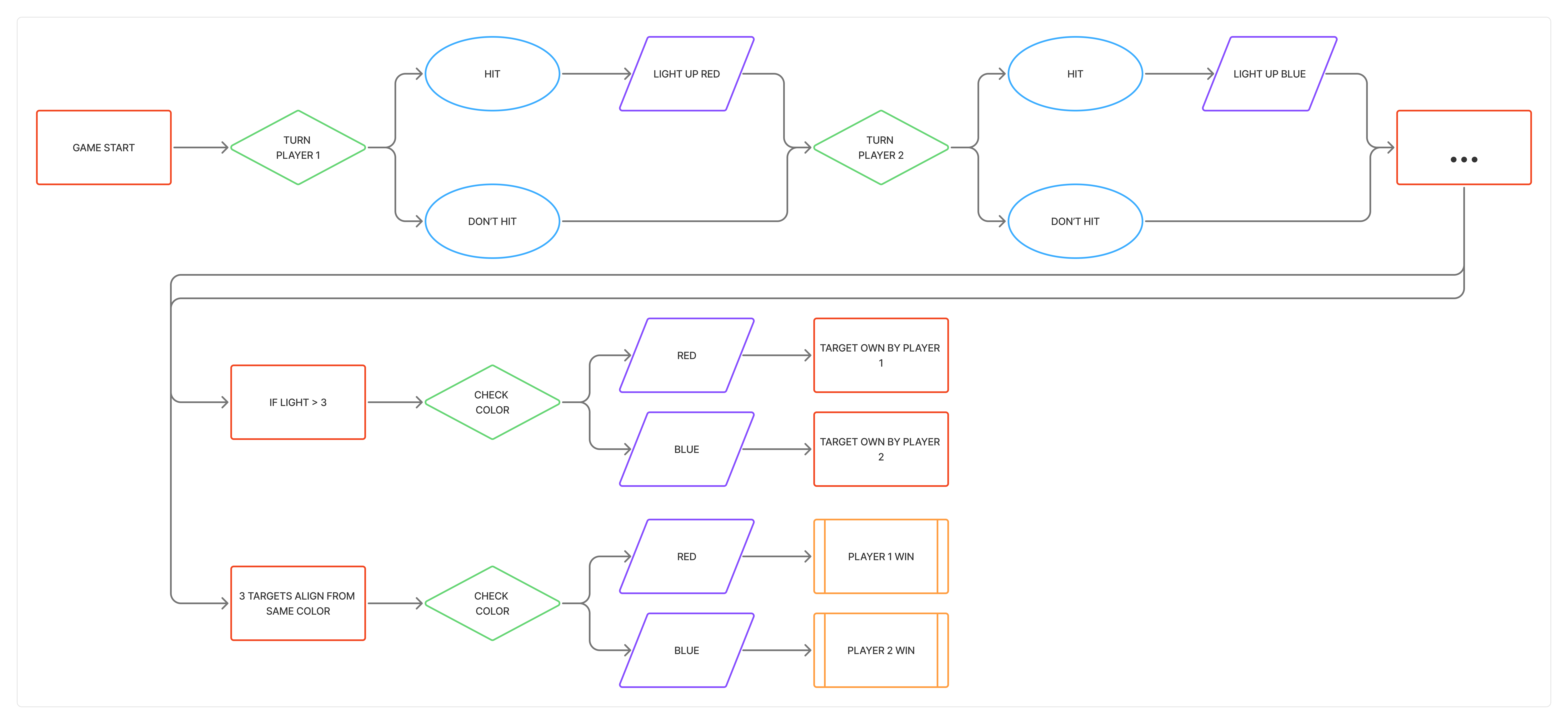
Each pressure plate has 3 LEDs which will light blue or red depending on the player’s turn. The plate with the most of one color becomes the property of the corresponding player.
The first player scoring on 3 consecutive plates wins the game.
Pressure plate
The pressure plate is built with a piezo sensor to detect if the player hits the target. At first, I created a proof of concept prototype for one pressure plate to test the range of value for when it is hit.
But when placed next to another pressure plate, the vibration was sensed by the first one, as they are all fixed on the same cardboard. First I try to decrease the vibration by creating different floors on the pressure plate. Then I defined a certain range of values to prevent this issue.
Scoring
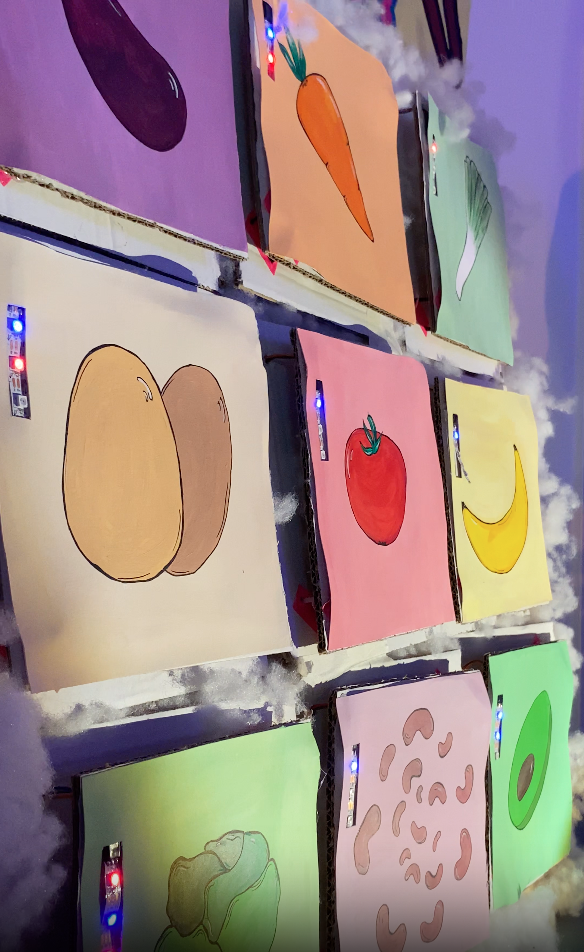
The second electronic component on the pressure plate is the 3 LED strips. They are used to display the score on the tile. When a hit is detected, one LED will light depending on the player’s turn. It is set as an automatic loop; the turn will change every time a tile is hit. When the ball hits the tile, the LED will light as the color of the player turns (Blue for player 1 and red for player 2).
When the third LED lights up on a tile, the next hit will not overwrite it and the tile will be locked.

Assembly
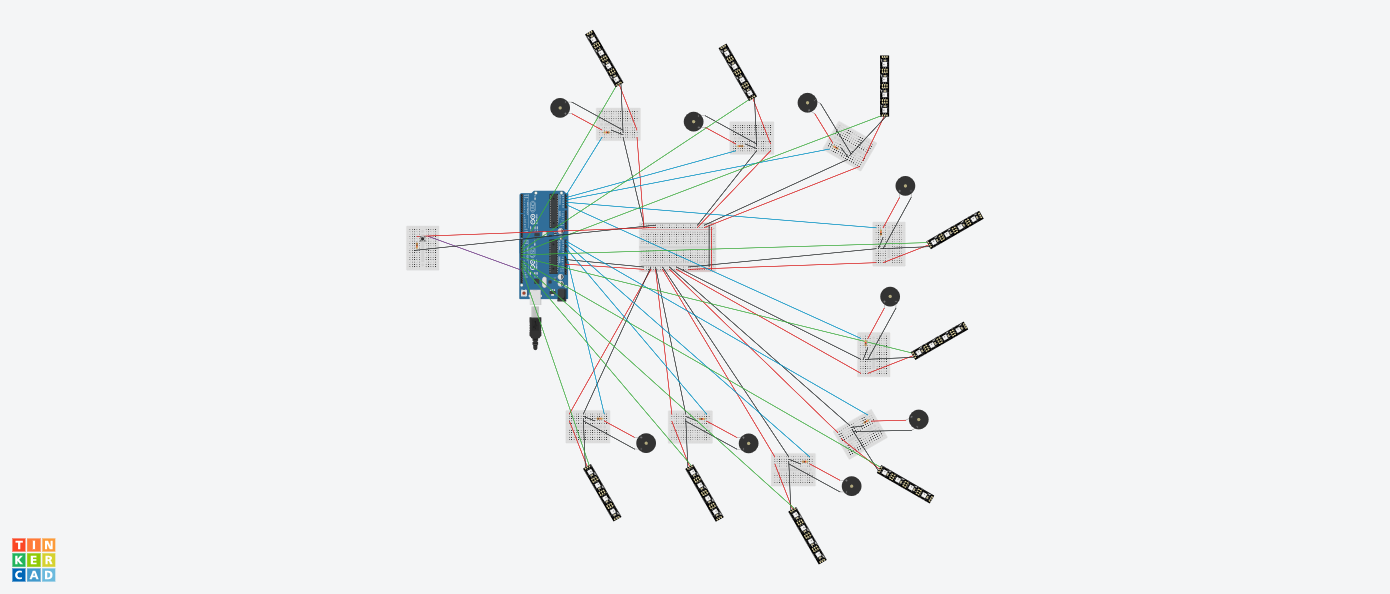
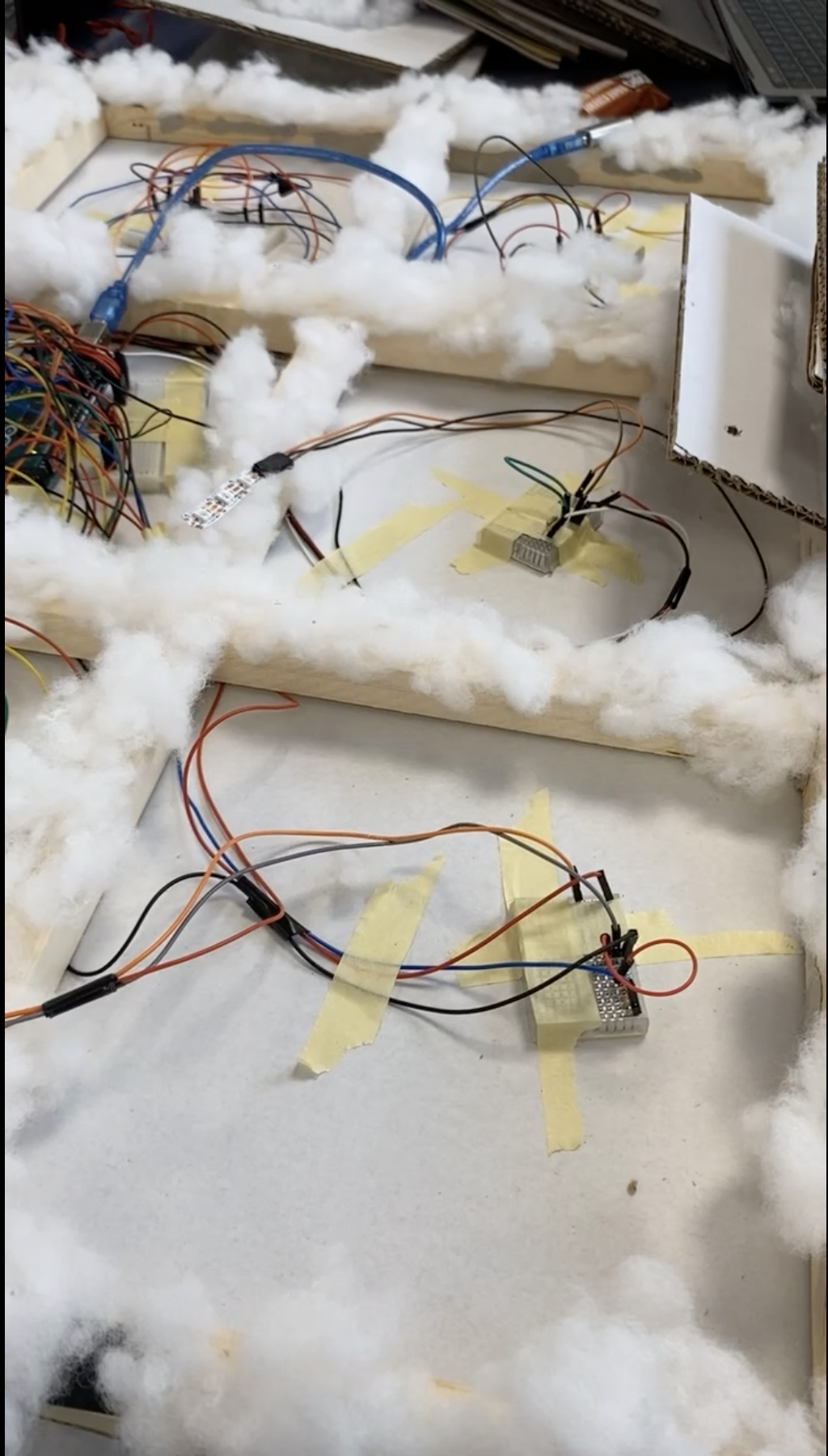
From the proof of concept prototype, I built the circuit for one pressure plate; it is composed of:
- A piezo sensor.
- A 3 LED strip.
- A breadboard to centralise the components.
- A lot of wires.
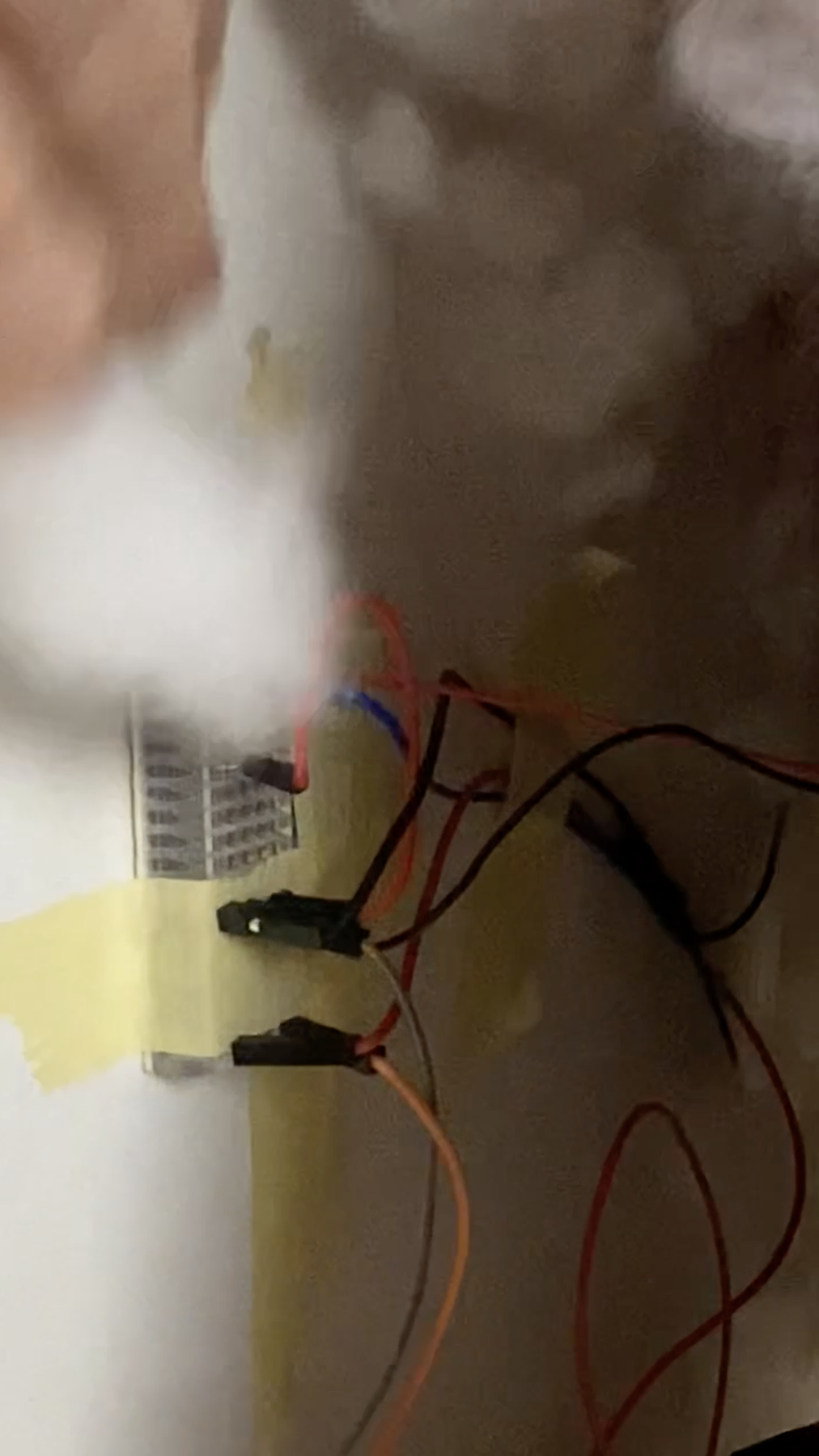
Single compo pic
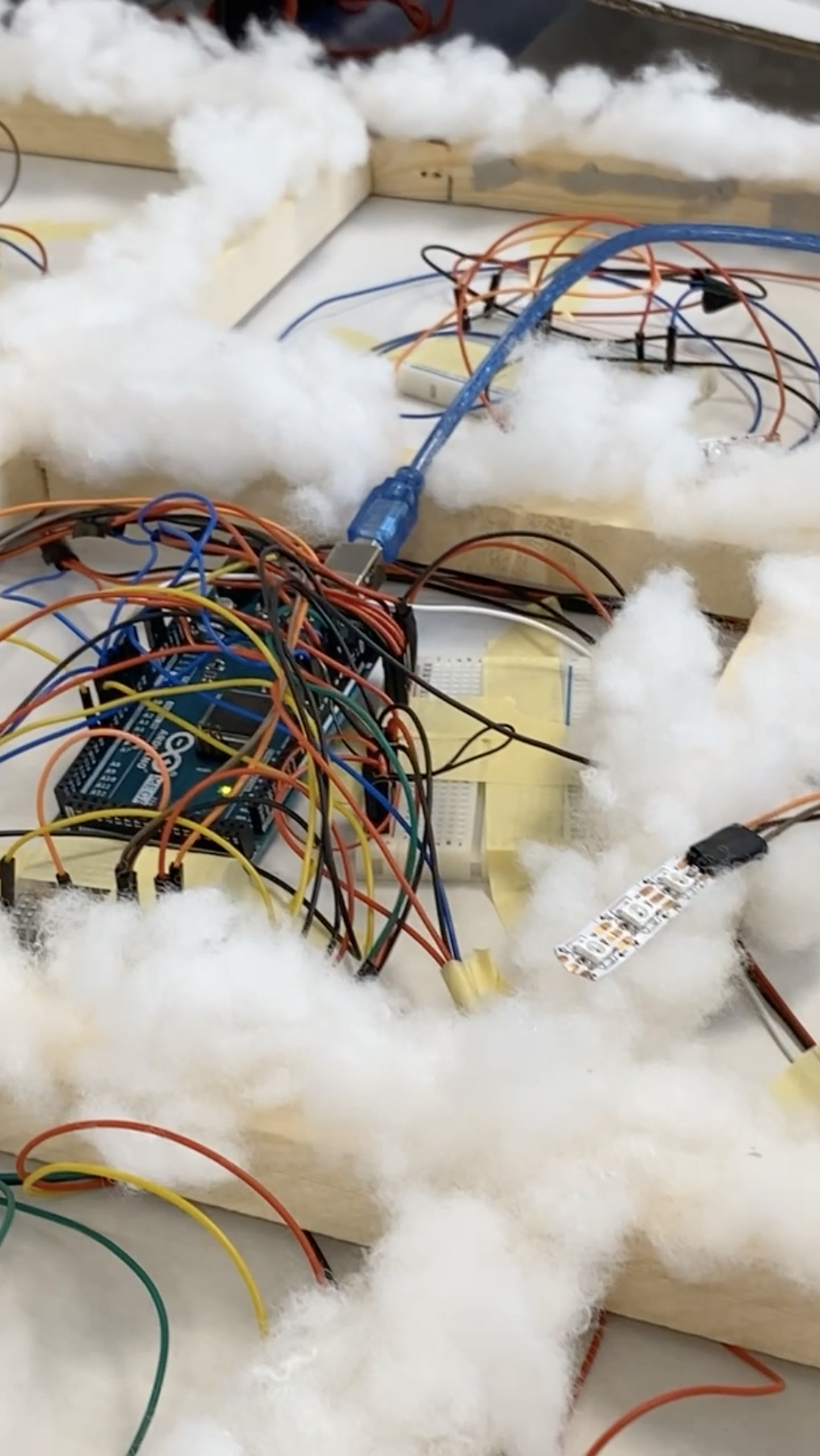
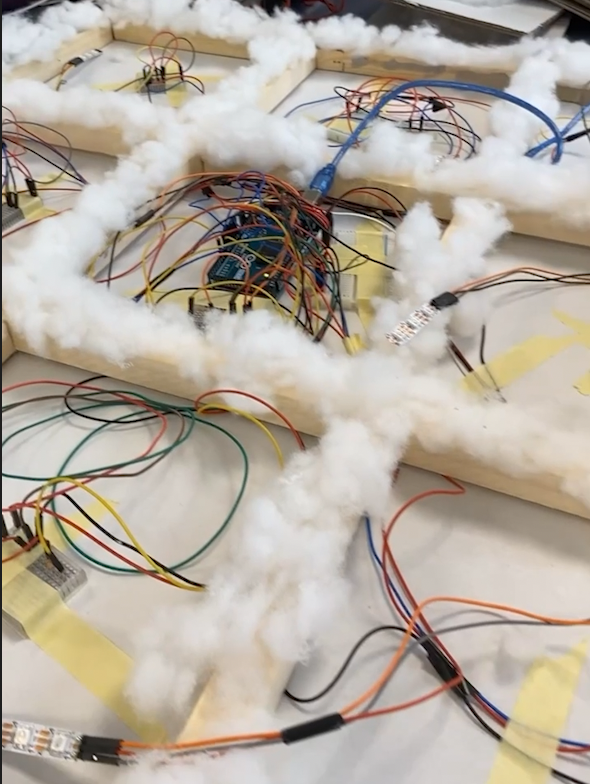
As there are 9 pressure plates on the board, there was a need for a strong cable management to store everything inside it. The main difficulty was to fix the wires in order for them not to fall off and the tile is hit. I performed several tests to prevent such a scenario from occurring.