My role
As a team school project we were 4 UX/UI designers working on it and even if I work mostly on the web prototype (HTML, CSS, JS) on the last of the project, I took part in the UX process involving: concept research, user research, user experience.
Context
Fast fashion consumers are driven by the desire for affordable, trendy clothing and social acceptance, with 60% admitting to buying items they don’t need; however, this behavior contributes to 10% of global carbon emissions, 92 million tonnes of textile waste annually, and significant water pollution threatening ecosystems.
This project aimed to address the question: How can we help fast fashion consumers visualize the impact of their purchases on the planet, raising awareness and encouraging more sustainable choices through better understanding of environmental and social consequences?
Competitions
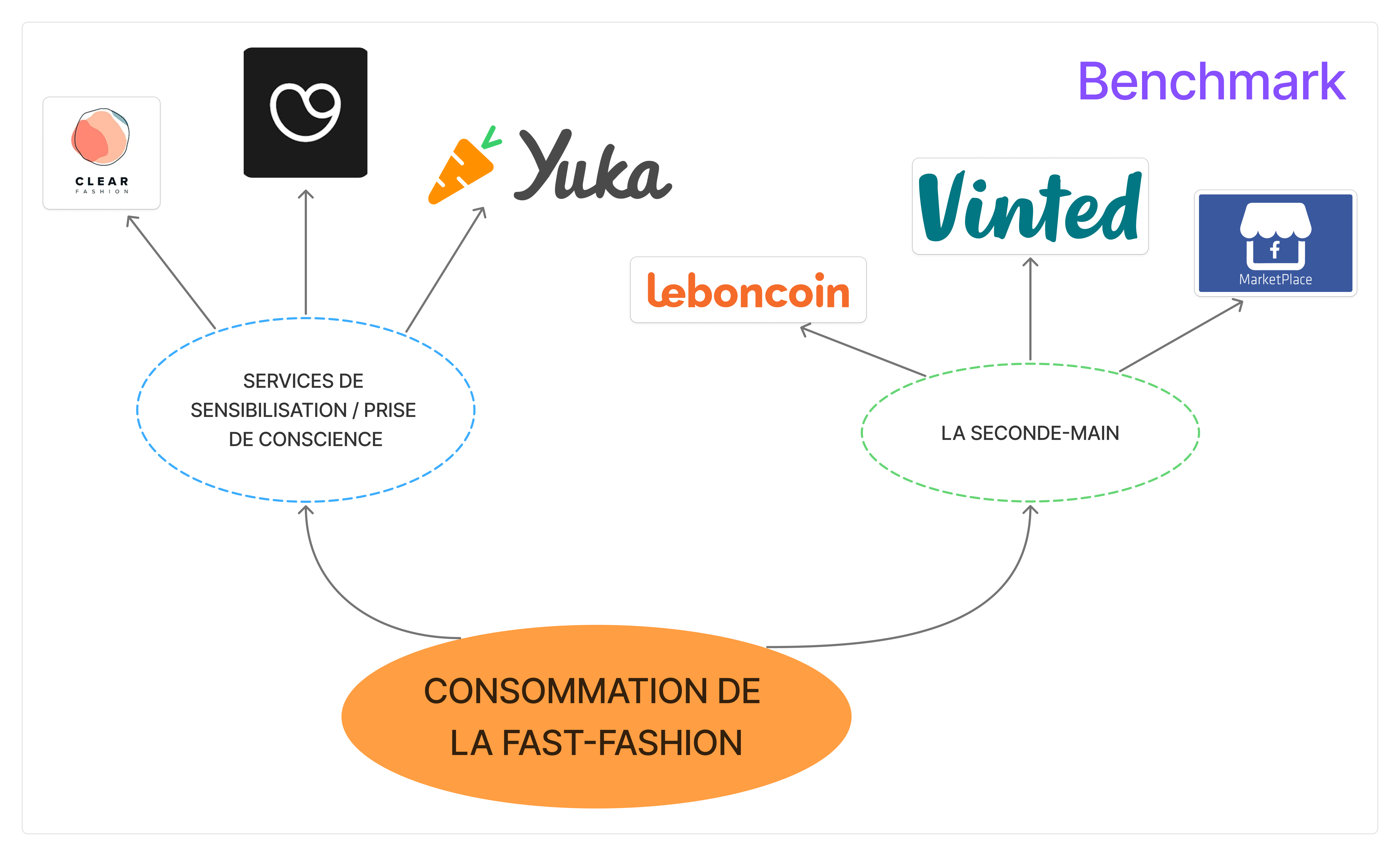
From this approach, we analyse what kind of initiatives already exist in the awareness of the impact of fast fashion to see how we can position our project.
Clear Fashion, Good On You, on a similar concept as Yuka, presents a visualisation of the impact the product had through its fabrication using public data from even the most famous brands such as H&M or Zara.
Vinted, leboncoin or even Facebook marketplace are the most famous services when it comes to buying secondhand; they are at the opposite of fast fashion but are the proof that we can survive without buying fresh new clothes.
User research
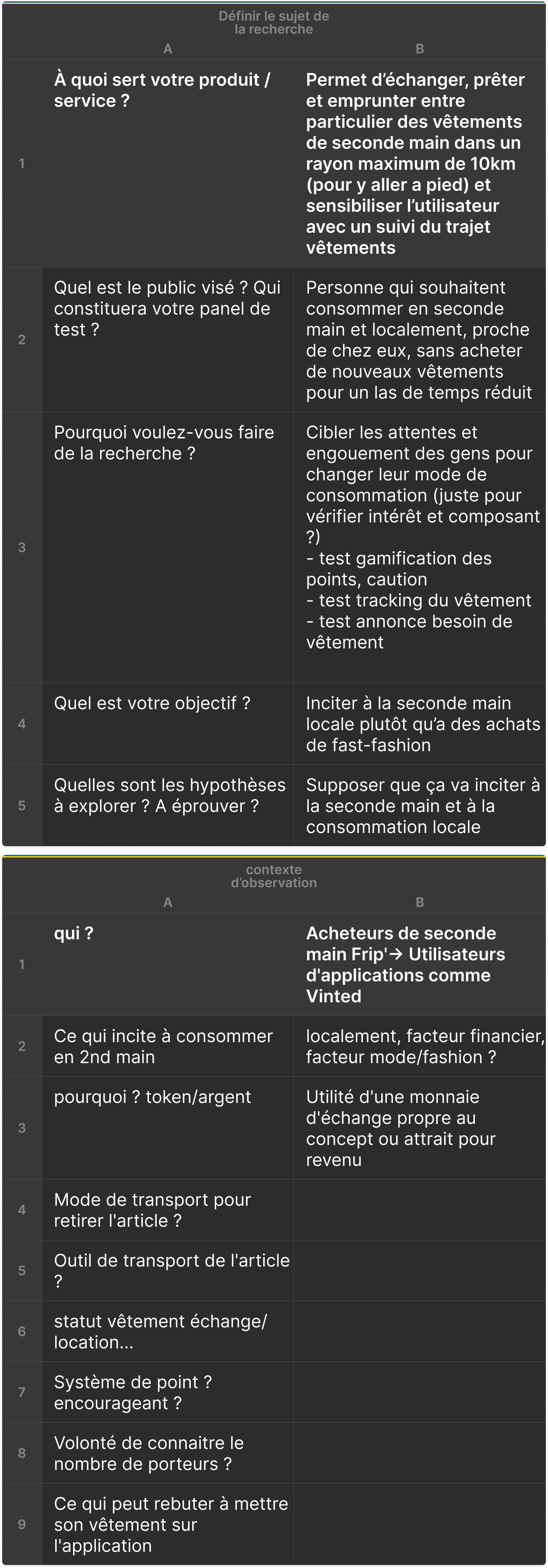
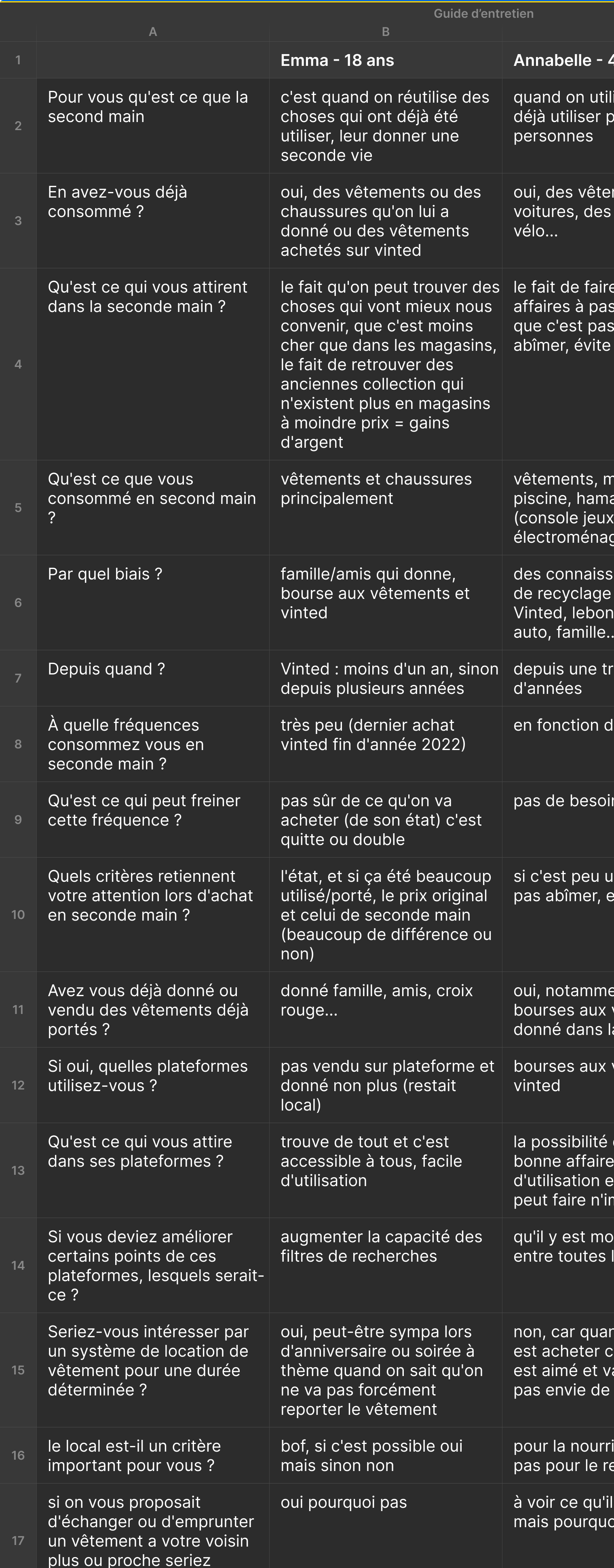
We conduct interviews on a dozen of people aged from 25 to 50 years old with a majority of women. Beforehand we defined a research framework and an observation context, our questions aimed to learn about their consumption habits and their opinions and positions on fast-fashion and second-hand consumption.
Positioning
Services to visualise the impact of the clothes and the fast-fashion on the planet already exist; new press articles and infographics are made every year on this subject, and the world of second-hand is blooming.
But what if, instead of buying fresh new clothes or second-hand clothes, we rent them. And what if we could visualise the economy made from renting clothes instead of the impact made during the fabrication.
This approach, different from every known service, is the core of our project, a service to rent little-used clothes to other individuals, focusing on a local scale and visualising the positive impact made from this action.
5W&H method
From this positioning we used the 5W&H to define and comprehend our concept better.
Next’Clothes is a mobile application that encourages close-to-home clothing rental to raise awareness about the environmental impact of fast fashion.
Persona
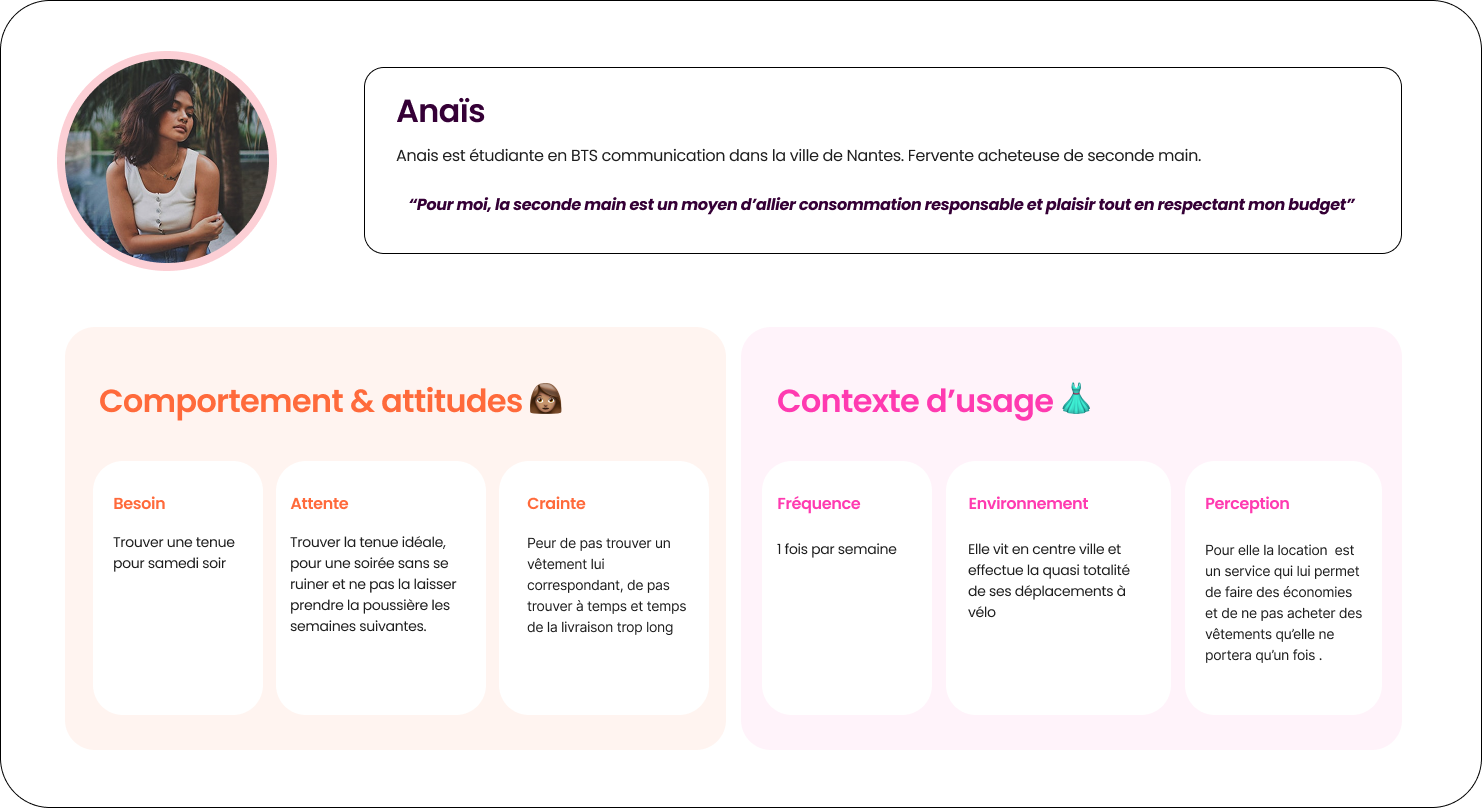
From our interviews, we build a persona fitting our ideal user: Anaïs, a student in her 20s. She is a frequent buyer of second-hand goods, as her motto is: “Second-hand shopping is a way to combine responsible consumption with enjoyment while still staying within my budget.” She struggles with buying clothes only for the use of one party and not using them often afterwards.
User scenario
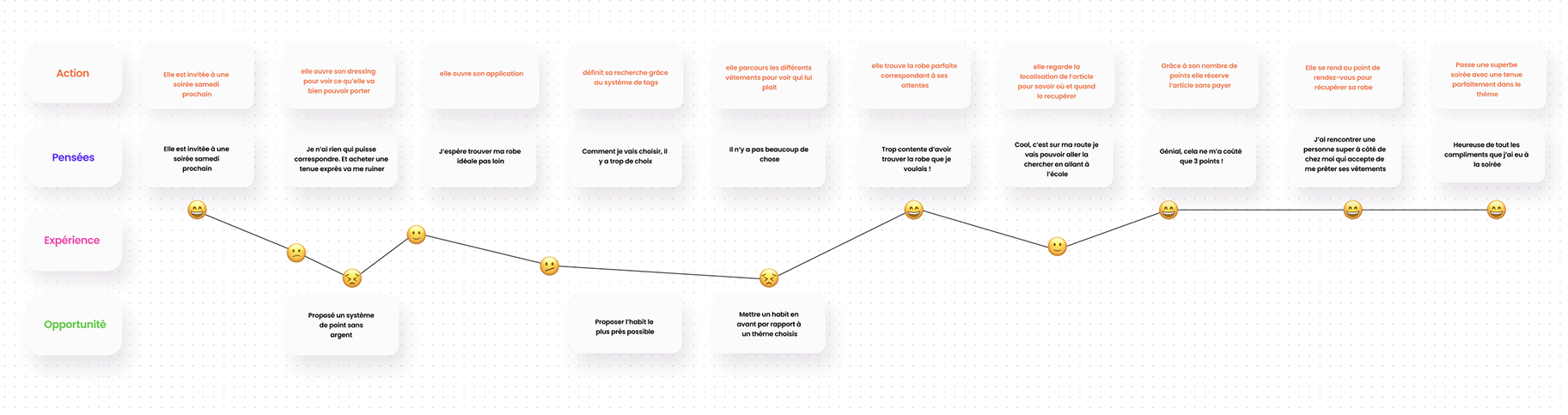
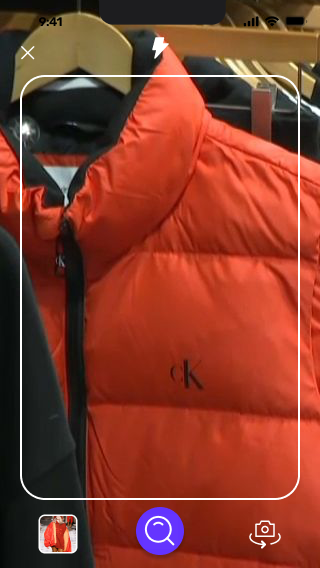
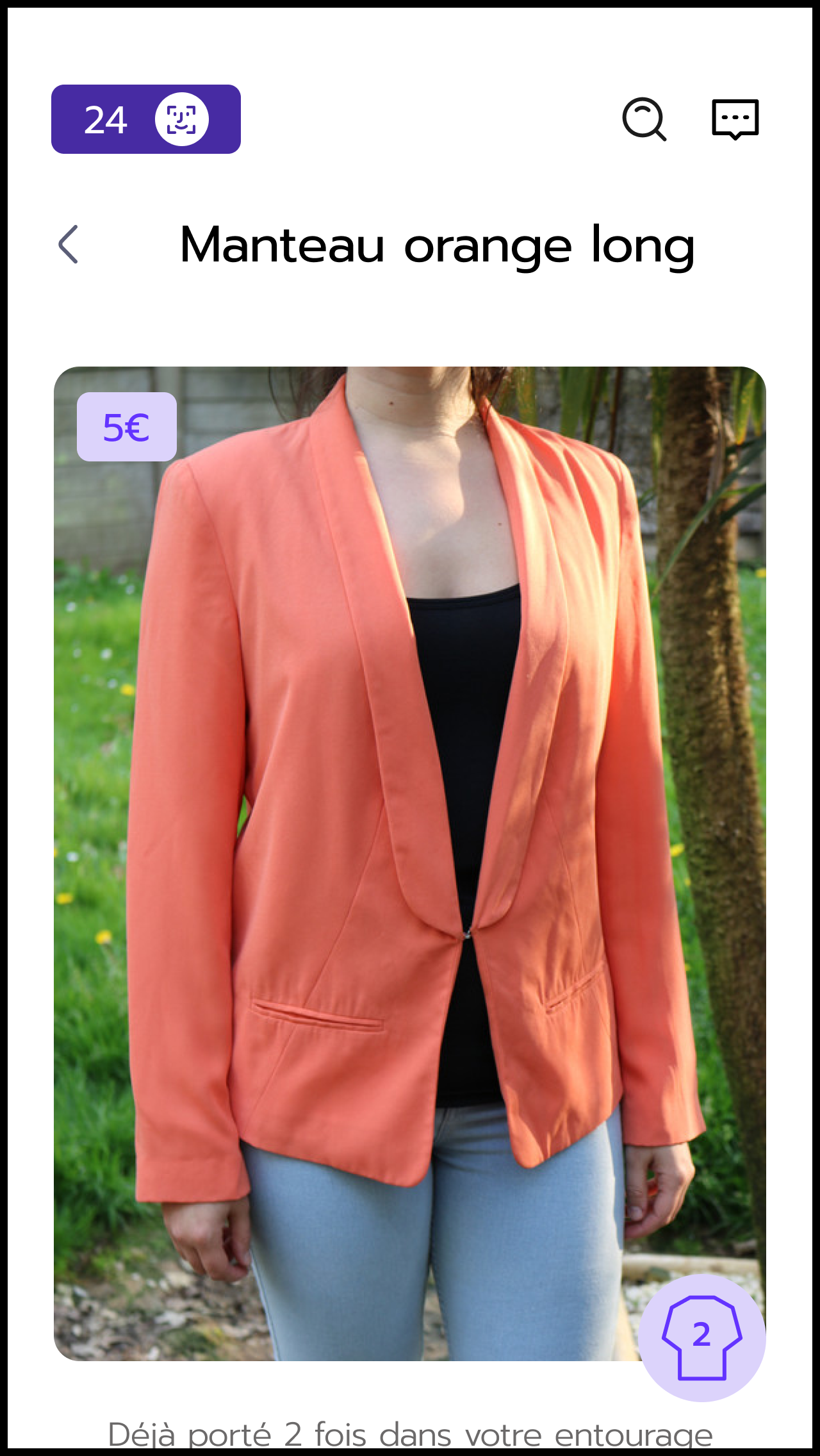
To illustrate how a user engages with our app, we explore a scenario where Anaïs aims to rent an orange jacket for a party, using the app to search for one from a reference she saw. We built an experience map around this scenario to identify the points of friction and the opportunities.
Taskflow
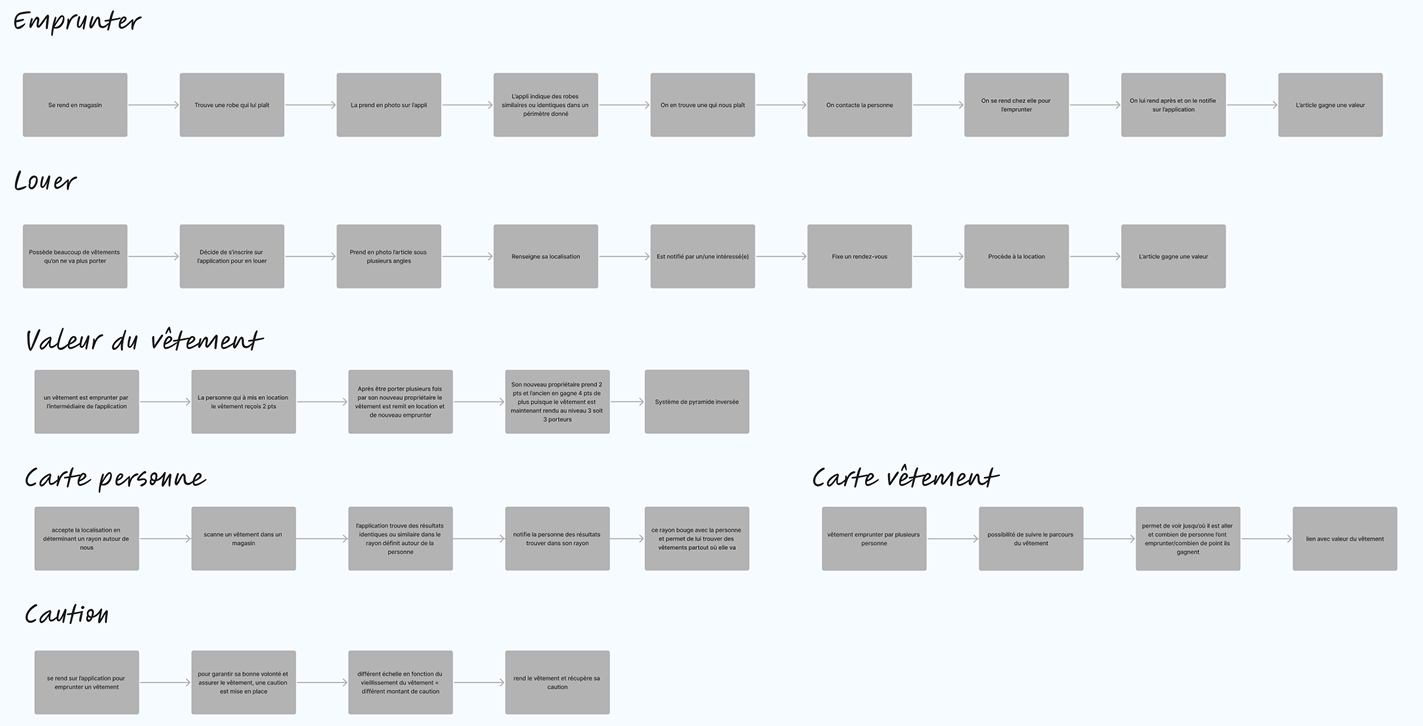
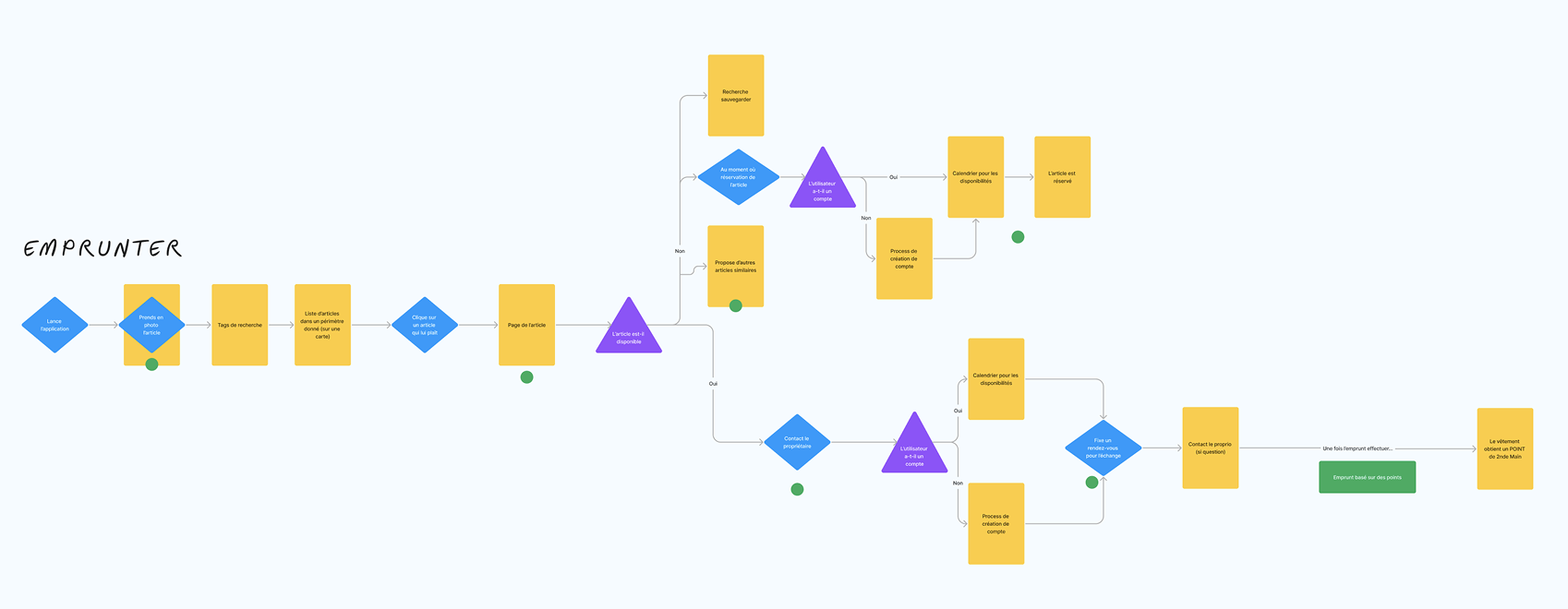
To understand the critical steps the user needs to take to achieve their goals, we mapped out the task flow, which highlights the sequence of actions required to complete key tasks within the app. This overview helped us identify necessary features and potential pain points early in the design process.
Userflow
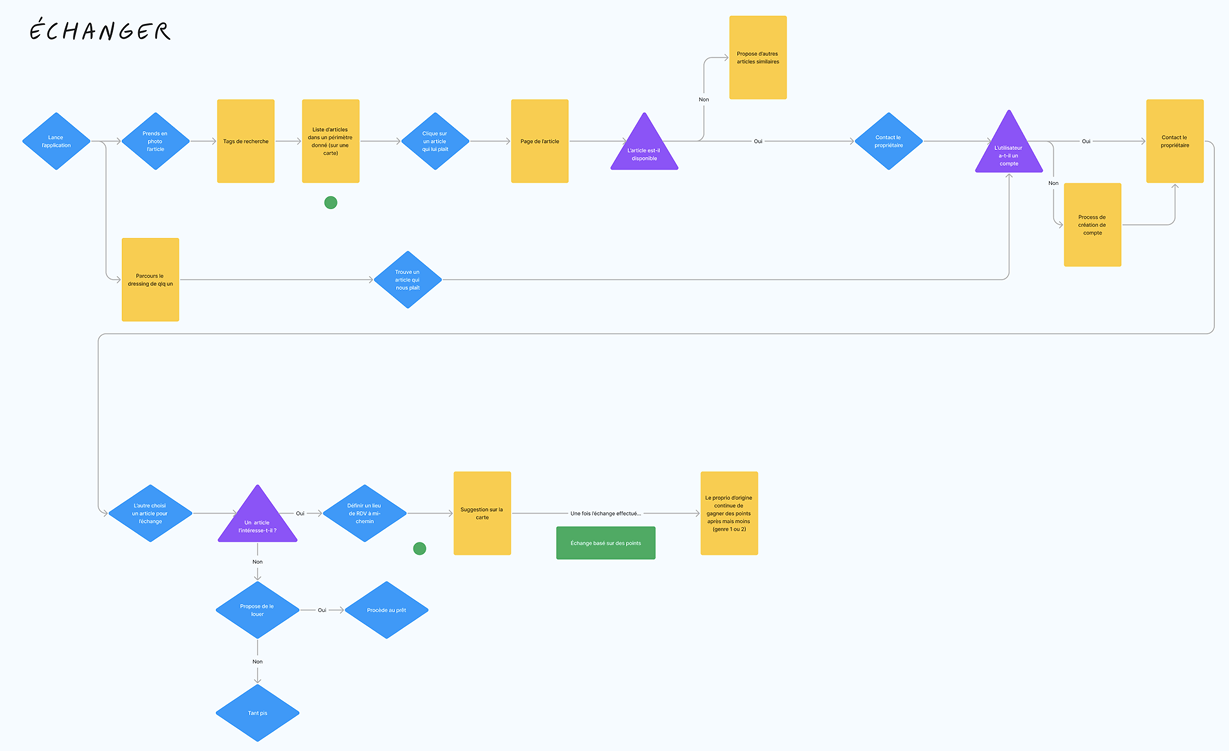
Building on the task flow, the user flow illustrates the detailed navigation paths users follow through the app’s interface, including decision points and screen transitions. This step-by-step journey ensured a smooth and intuitive experience by visualising how users interact with different features to accomplish their goals.
Coding
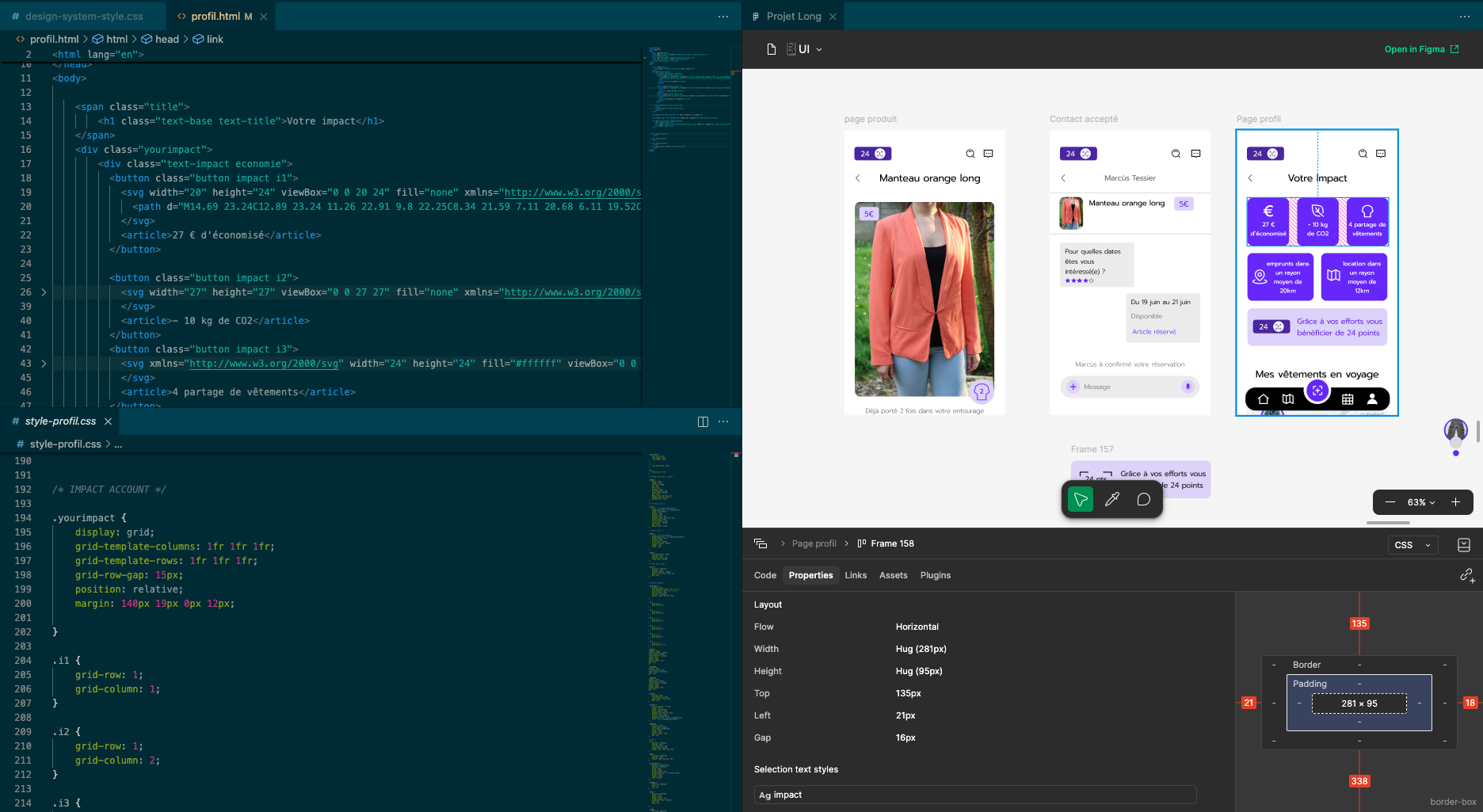
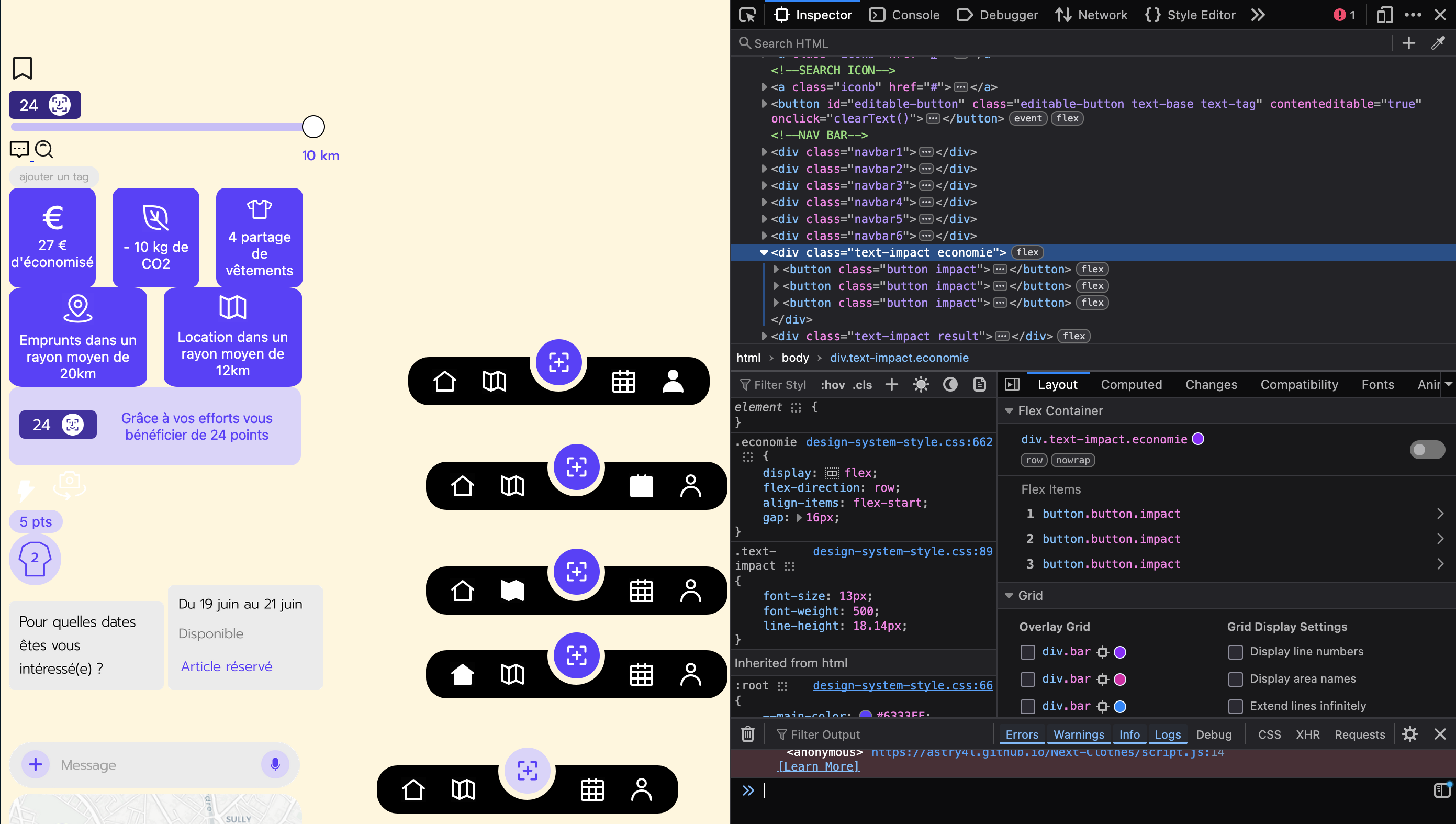
I coded the whole prototype using HTML, CSS and a bit of JavaScript (for some special interactions). During the whole process to recreate the interfaces, I used the Dev mode on Figma to import them directly into the code. The design system was dispatched into variables linked to a single CSS file which was used on every page to optimize the code along its own style.
Clothes searching
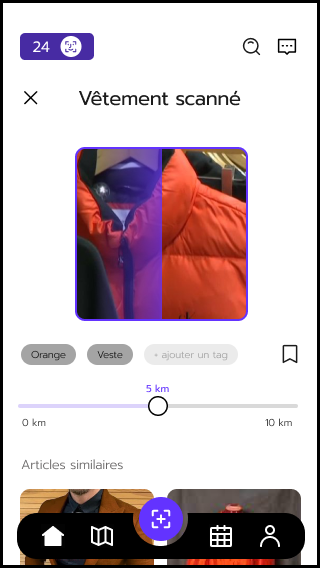
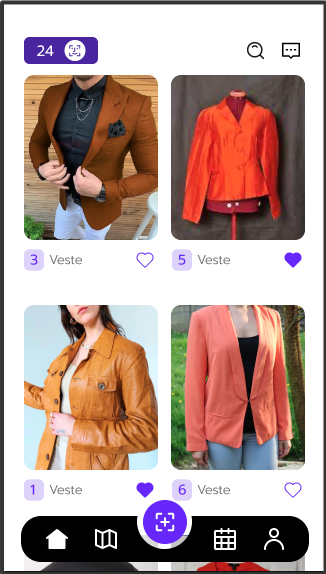
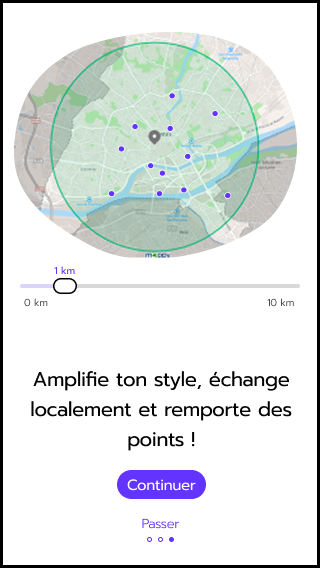
The main function of our app is to browse through the catalog of clothes in a certain perimeter from references. When you found an interesting clothes but don’t want to necessarily buy it because it will be worn once or twice, you can take a picture of it and the application will propose similar clothes.
Renting
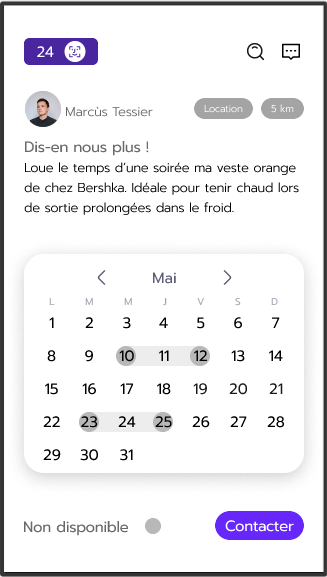
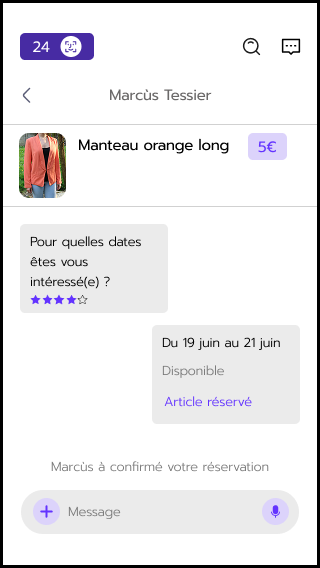
When you spot a cloth you would like to rent, you can see its availability on a calendar, making the process easier to check. There is a built-in chat box to talk with the owner and exchange information about some specifications on the cloth or the place to pick it up.
Insurance
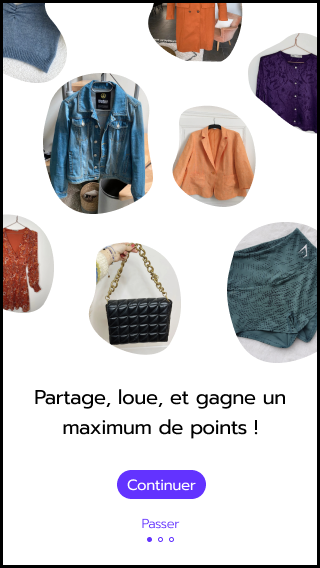
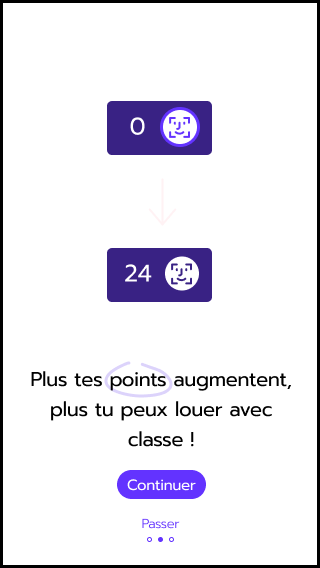
To rent a cloth we first thought about a point system which can be accumulated through renting for both sides, but there is no real insurance about this. When a person wants to rent a cloth, they will need to make a deposit based on the number of times it has been worn and depending on its initial value. The point system is still used as a trust indicator on the platform similar to star on other services.
Positive impact
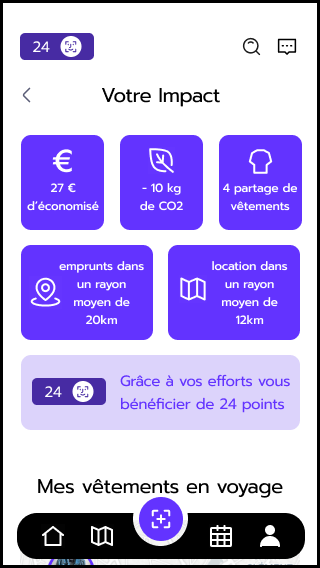
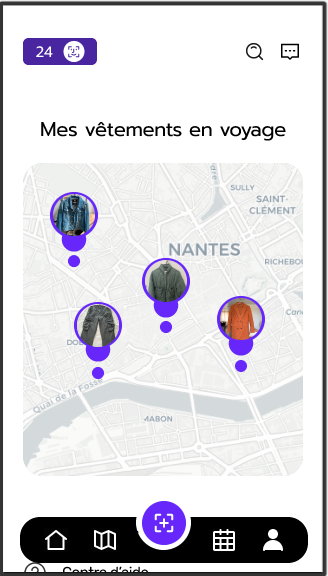
Our initial goal was to visualise and raise awareness about the impact of clothes consumption. From your account, the application will show your positive impact from renting clothes: the cost saved, number of clothes shared, distance traveled, and carbon savings.